Following a very successful conference, where our very own Richard Levy spoke on his specialist subject "Narrative Magic". He addressed a rapt audience at the packed conference. Here he is with the programme of the day.
Richard is a Centre For Pagan Studies speaker and is available for talks on various subjects. Richard is a Magician and Consecrated Priest with a background in philosophy and theology, he has given talks in other subjects such as Jewish magic and is a storyteller. For bookings please email to: enquiries@centre-for-pagan-studies.com
Reviews can be found here: http://centreforpaganstudies.blogspot.com.es/2018/04/reviews-on-leaping-hare-conference.html
Sunday, 25 March 2018
Wednesday, 28 February 2018
Richard Levy of the Centre For Pagan Studies talks to Lora OBrien, Irish Author and Guide to Ireland
>
The Centre for Pagan Studies FB Group is Here.
What is the most frustrating thing for you about being involved with that group?
I think it can be frustrating to find the right vocabulary. In magic
and Paganism we do not really have our own language so we have to work
quite philosophically to communicate effectively. I have seen people
essentially agree with each other but end up arguing as their words are
interpreted differently. Ultimately it is not really a problem just a
shame its hard to bypass.
What is the most satisfying thing for you about being involved with that group?
The fact that we remember those who came before us who made strides
for Paganism. We have set up blue plaques for people like Gerald Gardner
and Doreen Valiente. Also people involved are very engaged in the
subject matter and we discuss often some ancient practices which some
people still practice or have come across. We attempt to provide both an
educational resource (giving talks for example) and discussing these
subject matters keeping it organic and shifting.
If you could guarantee that each group member had read AT LEAST one book before joining, what book would that be?
I think it would be hard to pin point one book but I would go back to
faerie tales. To have read some of the Grimm brothers work and look
into the early stories as well as the colour books (The yellow fairy
book, red fairy book etc compiled by Andrew Lang).
There are some great occult books out there and some bad ones, though
I found all of those helped me develop a magical vocabulary.
Further to this I would encourage to read history and anthropology as well as classical texts.
Anything else youd like to share?!
Whilst books are great the essence of magic is doing it and living
it. The essence of paganism is in practicing it and living it. Keep it
simple and embrace the stories you were told growing up and the cartoons
you may have seen (often based on these books). When you have
conversations remember language is insufficient to express magic and
spirituality. So take care. When I talk to magical practitioners of
various traditions if you work to find a common language, we find we
have a lot in common.
would encourage people to tread lightly and to take their time and to listen.
Richard Levy works with the Centre for Pagan Studies and the Doreen Valiente Foundation.
Richard Levy of the Centre For Pagan Studies talks to Lora OBrien, Irish Author and Guide to Ireland
![]() |
| RICHARD LEVY BIO: I began my pagan path at a young age but and magic is something I feel was always a part of my life. But with time I learned how to nourish this part of myself. I feel today we are encouraged to ignore these parts of who we are and it is something we re-learn. It is in many ways learning to do what breeze and river and bird do naturally. I studied philosophy and theology at university and whilst I did not have formal training I learned a lot from people I met along my path from Children to adults. Should people want to contact me about the interview they can contact me on: mailto:rlevy285@gmail.com |
Richard Levy of the Centre For Pagan Studies talks to Lora OBrien, Irish Author and Guide to Ireland
Sunday, 11 February 2018
Interviews with Well known Pagans and Witches Julia Phillips
![]() |
| Julia Phillips at the Rollright Stones |
This interview was conducted by Richard Levy for the Centre For Pagan Studies in February 2018
1 – Could you tell us a little about how you got started in Wicca and why you were drawn to it?
I grew up in a haunted house with family members who were
both aware of, and interested in, the supernatural. It was therefore no stretch
of the imagination for me to accept that there are many things in this universe
that are not currently explicable. I love mysteries!
One of my earliest memories though (aged five/six) was of
spending time with my grandparents in very rural Ireland. We stayed with a
friend of my grandmother’s in a small hamlet. The farmhouse had no gas, no
electricity and no running water. It was one of my jobs each morning to carry
billy cans to the spring a couple of fields away to fill with water and carry
back to the farm. I also learned how to milk cows and make butter, and to cook
on an open fire in cast iron cauldrons.
When Lammas came around and all the work in the fields had
been finished, a céilí was held at the farmhouse where we were living. The
whole community gathered and played, sang and danced into the wee hours. I have
a vivid memory of one of the old farmers taking me outside and, while I was
seated on his shoulders, he told me that the lights we could see flickering in
the distance were the king and queen of the fairies and all their subjects. He
said they were also celebrating Lammas and were in a procession on their way
back to their home in hills. It was my birthday night (at midnight I reached
the grand old age of six!) and his story telling was one of the most magical things
I remember.
Like many others of my generation my formal introduction to
practical occultism/paganism came through the Society of Psychical Research in
Kensington. A friend and I frequently attended lectures and made good use of
the extensive library. That led to me studying the tarot and astrology, which
in turn led to me being invited to join a coven and be initiated.
Wicca turned out to be a great choice for me because it
combines all those things that most appeal to me within one inclusive pathway.
It is magical, spiritual, acknowledges the Mystery, and also provides a core
directive to focus upon self-development: “keep pure your highest ideal, strive
ever towards it, let naught stop you or turn you aside.”
2- Is there anything in The Craft you recall seeing more of when you were younger and you would like to see return?
For Wicca to remain a relevant, vibrant pathway it has to
reflect the society in which it exists so whilst I might have a sense of
wistful longing for the days when we relied upon personal interaction rather
than Facebook groups, it’s not a realistic option for the 21st
century. Indeed, my own branch of the family is so far flung that we rely
heavily upon a private Facebook group for us all to keep in touch with each
other.
The things about Wicca that I have always valued the most
remain a part of my community today; Grand Sabbats, sharing ideas with other
Wiccans, meeting up socially, knowing I have a wonderful family who are always
there for me, no matter what… so for me, there isn’t anything I would like to
see return as it never went away.
3 – Who I the Craft would you say influenced you the most?
There isn’t any one person. I have learned from a lot of
different people and I continue to learn from them all today. One thing I
treasure about my involvement in Wicca is that it has brought me into contact
with some amazing, talented, and inspiring people I would never otherwise have
met.
4 – Are there any must read books you would always recommend?
I think it’s good practice for people to read widely and
then discriminate effectively! There is no replacement for practical experience
and personal growth within a coven, but as a lover of books I am always going
to encourage people to read. The classics are never going to go our of fashion
– Gardner, Valiente, Crowley, Fortune et al. Vivianne Crowley’s books about
Wicca are excellent and for an historical perspective, Ronald Hutton.
I have a particular interest in traditional witchcraft and
some of the authors I most enjoy are Norman Cohn, Jeffrey Russell, Christina
Larner and Owen Davies.
Tarot (my original area of study) is overflowing with books
and tarot decks these days. I tend to go back to Wang, Crowley, Nicholls, and
Kaplan, but there are many others I enjoy.
I am also a firm believer in the value of fiction. Studying
academic (or at least non-fiction) texts is interesting but sometimes it takes
a work of fiction to ignite that spark that leads to revelation.
5 – What other traditions influence your practice? / do you work with?
I teach a system of magic that we call Hermetics – it has
nothing to do with Wicca or Franz Bardon, but is a system that has its origins
in the ancient Hermetic Schools and developed through the philosophy of
Paracelsus and the Renaissance practice of the Art of Memory.
I also practise a form of angelic magic based upon Madeline
Montalban’s Order of the Morning Star, with my own interpretation of the Book
of Enoch.
6 – Do you have a favourite Sabbat and why?
My favourite would be the Hallows, which is the point of the
spiral that encourages Wiccans to explore the Sacred Mystery that is hidden
from view. The Mystery remains but we can get a glimpse behind the veil and in
my experience this will bring new insights, possibly moments of clarity, and
even an epiphany.
7 – As time has gone has your approach to magic changed and dos it continue to change?
Gosh, I hope so! I’d be devastated if I thought I was doing
the same things in the same way that I did them 40 years ago. I think a quote
from Dion Fortune expresses my attitude to this very well:
“There are things I wrote of Spiritualism twenty years ago which, in the light of wider
experience, I would not write today, and to cite these as evidence against me
is to deny the possibility of human progress.” (Dion Fortune, December 1942)
I do think that the fundamental principles of magic are
consistent though; hard work coupled with persistence and an ability to focus.
What tools or techniques one uses are pretty much down to personal choice, but
those three principles are critical.
8 – What are some of the lessons training others has taught you over the years?
Well, the first thing is I don’t train others in Wicca. Our
coven is a group of equals and we all share ideas, knowledge, techniques,
information, and so on. I might have a specific skill to pass on, but then
another coven sibling will have something different to share, so it all works
out.
In Hermetics, however, I do train others and I encourage (indeed,
insist on!) respect for every member of the group so that no one ever feels shy
or embarrassed about sharing an experience or asking a question. Also, no
matter how abstract it may be, the experience or the learning is what that
particular person needs at that moment and it should be accepted as such. It
can be discussed and dissected but it should never be dismissed just because it
might be something a little out of the ordinary.
9 – What general advice would you give a novice?
Rule One – never ignore your intuition. Rule Two – see Rule One.
I cannot count how many times I have read or heard people
complain about a bad experience only to finish with, “he/she always felt
somehow off to me.” Trust your intuition and if something feels off or wrong,
then it is almost certainly something or someone to avoid.
I would also suggest you consider whether you have anything apart
from Wicca in common with the other coven members. In our coven we share
interests that go way beyond Wicca (theatre, music, good food, wine, books,
movies etc.) and in my experience that’s a very sound basis for an effective
group.
10 – What is the main kind of work you do now? Are you writing or training or trying to be less busy?
I retired almost a year ago but there is nothing “less busy”
about my life! For the past 25 years I’ve been a CEO in (primarily) sport and I
had thought life might ease off a little after retirement but that proved to be
naïve on my part.
I’m a bit odd within the Wiccan world as my immediate Wiccan
family is in Australia, New Zealand, Europe, Canada, USA, and one in Malaysia
(he was a member of my Melbourne coven but then moved back home to Malaysia
after completing his PhD). I am incredibly blessed to be a part of such an
amazing, vibrant family and I love visiting – have wand will travel! During
April and May I will catch up with family in Melbourne, Sydney, British
Columbia, Ontario and Indiana, which is an absolute delight to me.
Other than travelling, my book about the principles of Wicca
(Witches of Oz) was published 25 years ago and I’m currently revising it for a
third edition. I will also be editing magical diaries from the Hermetic Temple
that Rufus Harrington and I ran in London in the 1980s for publication. It’s a
fabulous insight into the magical world of some of the most talented magicians
I have ever met and I’m looking forward to getting on with it when I get back
to England at the end of May.
A few people contacted me about Hermetics recently and I
have a couple of workshops in the diary, so that might lead to a regular group.
Wednesday, 7 February 2018
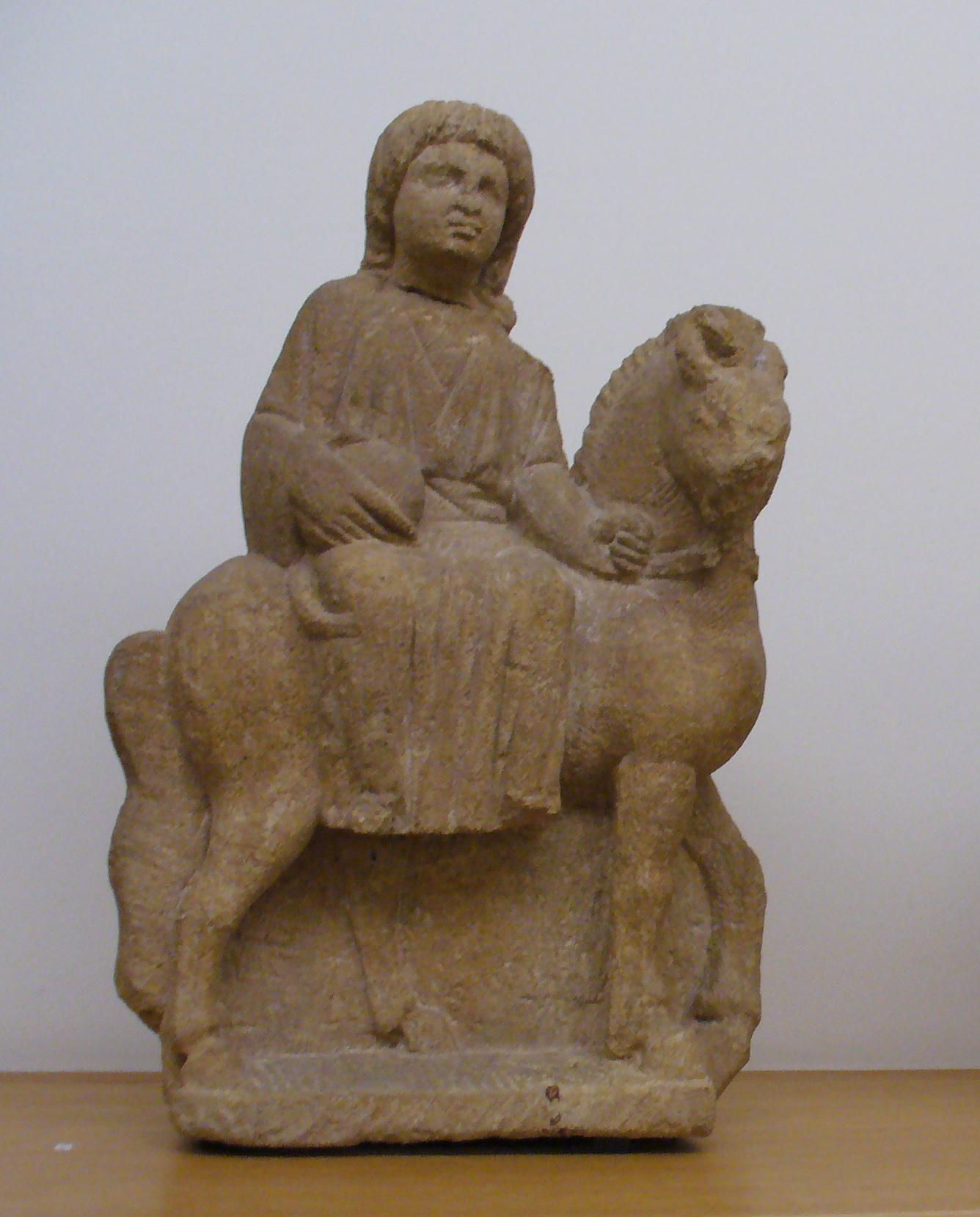
Goddess Epona -
This Article is about the Gaulish Horse Goddess Epona, written for the Centre For Pagan Studies by Elaine Hindle
The name Epona comes from Iron Age Gaulish.
The word Epos means horse in Gaulish and derives
from a proto-Indo- European root
Gaulish: “os’ is
the male ending and ‘a’ being the female
ending.
Personal names containing the word horse
examples: Epacus, Epasius, Eppia
Epona was worshipped in Western Europe.
Dedications to her were found on both the
Antonine and Hadrian’s walls.
Although her name is Gaulish, no inscriptions
have been found in Gaulish but only in Latin or Greek.
It is likely that the Emperor’s Horse guards may have been the main unit
to spread the Epona dedications throughout the Roman Empire.
Flanked
by two horses, Epona is shown sitting on a throne holding a fruit basket on her
lap.
But it is unclear whether the same applied regarding the spread of non-military artefacts e.g. sidesaddle Epona.
Depictions of Epona are mainly on bas-relief
clay, some bronze and one wood.
Sidesaddle
The main depiction is of her sitting sideways on a horse, wearing a long dress, gathered under the bust and sometimes a cloak around her head. The horse or mare is usually walking to the right, or standing still. There may be reins. The goddess usually has her hand on the mane, neck or head, or sometimes carries a cornucopia. The other hand holds a patera (serving dish) or basket of fruit.
Sometimes there may also be a foal.
Imperial
This depiction shows Epona either seated or
standing facing forward, with two or four horses on either side of her, eating
wheat or apples from her lap.
This imperial type was more common outside Gaul.
Cart
Much less common is Epona depicted riding a cart
driven by horses or mules; one such has seven horses pulling the cart.
Epona was a protector of horses and was worshipped
primarily by those whose work involved horses i.e. the cavalry, dispatch
riders, scouts, mule drivers, carters, stable hands and grooms.
She was worshipped in temples by the Romans by
praying, making vows, erecting altars, sacrificing animals, incense and wine.
Pipe clay figures of her were also found in the
home.
She was also worshipped in the stables and
altars and paintings have been found which were decorated with roses. She
protected the horses and asses.
The origins of Epona before the Roman Empire are
not well know, she may have been a native Gaulish Goddess, or a fusion Goddess
created of Gaulish, Germanic and Danubian peoples when they formed the Roman
Cavalry. Or perhaps she came from much older deities.
This article can be found here: http://centre-for-pagan-studies.com/centre_for_pagan_studies-paganism-Blog-17.php#sthash.GFFqgVHm.dpbs
Thursday, 27 July 2017
https://treecharter.uk/thank-you/
About the Tree Charter
Led by the Woodland Trust, more than 70 organisations from across multiple sectors are working together to build a future in which trees and people stand stronger together.
On 6 November 2017, the 800th anniversary of the influential 1217 Charter of the Forest, we will launch the Charter for Trees, Woods and People. More than 50,000 tree stories have been submitted in the last year and the themes from these stories have informed the ten principles which underpin the charter. We believe the people of the UK have a right to the many benefits brought by trees and woods. The new charter will recognise, celebrate and protect this right.
The Tree Charter will draw its strength from the hundreds of thousands of people across the UK that sign.
Sign the Tree Charter Here
https://sign.treecharter.uk/page/6023/petition/1
About the Tree Charter
Led by the Woodland Trust, more than 70 organisations from across multiple sectors are working together to build a future in which trees and people stand stronger together.
On 6 November 2017, the 800th anniversary of the influential 1217 Charter of the Forest, we will launch the Charter for Trees, Woods and People. More than 50,000 tree stories have been submitted in the last year and the themes from these stories have informed the ten principles which underpin the charter. We believe the people of the UK have a right to the many benefits brought by trees and woods. The new charter will recognise, celebrate and protect this right.
The Tree Charter will draw its strength from the hundreds of thousands of people across the UK that sign.
Sign the Tree Charter Here
https://sign.treecharter.uk/page/6023/petition/1
Labels:
tree charter,
woodland
Location:
United Kingdom
Tuesday, 25 July 2017
Thought for the Day Sunday 23 July 2017
Thought for the day Sunday.... Music aids me in my meditation and devotions. This is one of my favourites, what is yours?
Song:
Witch's Rune Artist: S.J.Tucker Album: Blessings Darksome night and
shining moon Balance of the dark and light Hearken ye our witch's rune
As we perfor...
Wednesday, 8 June 2016
Remembering Gerald Gardner - a day of talks at Preston Manor, Saturday 18th June, 10:30am, Brighton.
http://www.wherewitchcraftlives.org/gerald_gardner-meme-gbg1.php
Celebrate Gerald Gardner's 132nd birthday next week. Ashley Mortimer, Philip Carr-Gomm and Tam Campbell will be at Preston Manor to discuss Gardner's place in modern pagan history, including a reading of his historic 1955 talk, believed to be the first legal public talk about witchcraft since the repeal of the 1735 witchcraft act.
Gardner's original Book of Shadows will be on display with artefacts from the Doreen Valiente collection. Tickets are included in the price of entry to Preston Manor, although limited spaces are available for each talk.
Celebrate Gerald Gardner's 132nd birthday next week. Ashley Mortimer, Philip Carr-Gomm and Tam Campbell will be at Preston Manor to discuss Gardner's place in modern pagan history, including a reading of his historic 1955 talk, believed to be the first legal public talk about witchcraft since the repeal of the 1735 witchcraft act.
Gardner's original Book of Shadows will be on display with artefacts from the Doreen Valiente collection. Tickets are included in the price of entry to Preston Manor, although limited spaces are available for each talk.
Subscribe to:
Posts (Atom)


_(7957495588).jpg)